Har-Anand Publications


Home

History and Politics
A Question of Pride: China-Tibet-India Border Conflicts
A Question of Pride: China-Tibet-India Border Conflicts
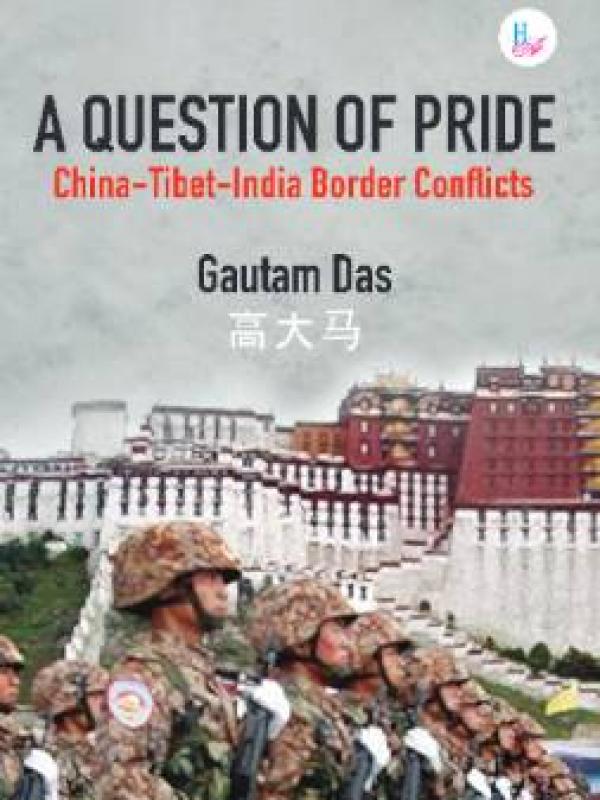
The main reasons why China-Indian geo-political relations have an underlying uneasiness is because of the issue of Tibet. It is the basis of the Chinese claim to the entire Indian state of Arunachal Pradesh, which it alleges is ‘Chinese territory occupied by India’. This territorial dispute creates the unresolved boundary issue. Inability to agree led to a limited war in October-November 1982, resulting in a humiliating defeat for India. China-India relations have thus remained semi-hostage to the unresolved territorial dispute. There is continuing suspicion in China regarding India's attitude towards Tibet, mainly because of the Dalai Lama's residence in India as a ‘guest of India’. A recounting of these issues, and a summarization of the Sino-Indian boundary dispute, make up the first of the three stand-alone parts of the book. A summarised history of the 1962 war along with an analysis of the conduct of the war by India forms the second part. The third part is devoted to the future: starting from the existing Sino-Indian diplomatic impasse, and examining its strategic implications for India.
prodaja stanova pik smrtovnice blumen horoskop kalkulator online knjige pdf cvijece vicevi
Read MoreAvailability : In Stock
ISBN : 978-93-91504-68-7
 Add to cart
Description
The main reasons why China-Indian geo-political relations have an underlying uneasiness is because of the issue of Tibet. It is the basis of the Chinese claim to the entire Indian state of Arunachal Pradesh, which it alleges is ‘Chinese territory occupied by India’. This territorial dispute creates the unresolved boundary issue. Inability to agree led to a limited war in October-November 1982, resulting in a humiliating defeat for India. China-India relations have thus remained semi-hostage to the unresolved territorial dispute. There is continuing suspicion in China regarding India's attitude towards Tibet, mainly because of the Dalai Lama's residence in India as a ‘guest of India’. A recounting of these issues, and a summarization of the Sino-Indian boundary dispute, make up the first of the three stand-alone parts of the book. A summarised history of the 1962 war along with an analysis of the conduct of the war by India forms the second part. The third part is devoted to the future: starting from the existing Sino-Indian diplomatic impasse, and examining its strategic implications for India.
prodaja stanova pik smrtovnice blumen horoskop kalkulator online knjige pdf cvijece vicevi
Author/Editor
Gautam Das Gautam Das (Retd) holds an M.A. in Defence Studies from the University of Madras and served in the Indian Army from 1968 to 1991. An officer of the Combat Arms, he commanded troops across major operational areas and held key General Staff appointments in operations and intelligence at divisional, corps, and command headquarters. A proud officer of the 11th Gorkha Rifles (2/11 GR), he served through the 1971 India–Pakistan War, including a politico-military liaison role in Dhaka during the post-war phase of Operation Cactus Lily. His service also included field operations in Nagaland’s Chakhesang region during Operation Orchid, border-sealing duties during Operation Dusk in northern Rajasthan, and command of a combat team of tanks and infantry during Exercise Brass Tacks IV-Operation Trident. His practical experience, coupled with a deep study of Indian military history—both pre- and post-Independence—gives him a distinctive perspective on Indian defense.
Book Details |
|
|---|---|
| Author/Editor | Gautam Das |
| ISBN | 978-93-91504-68-7 |
| Subject | History and Politics |
| Number of Pages | 324 |
| Weight | 582 |
| Publisher | HAR-ANAND PUBLICATIONS PVT LTD |
| Publication Year | 2022 |
| Language | English |
| Binding | Paperback |